
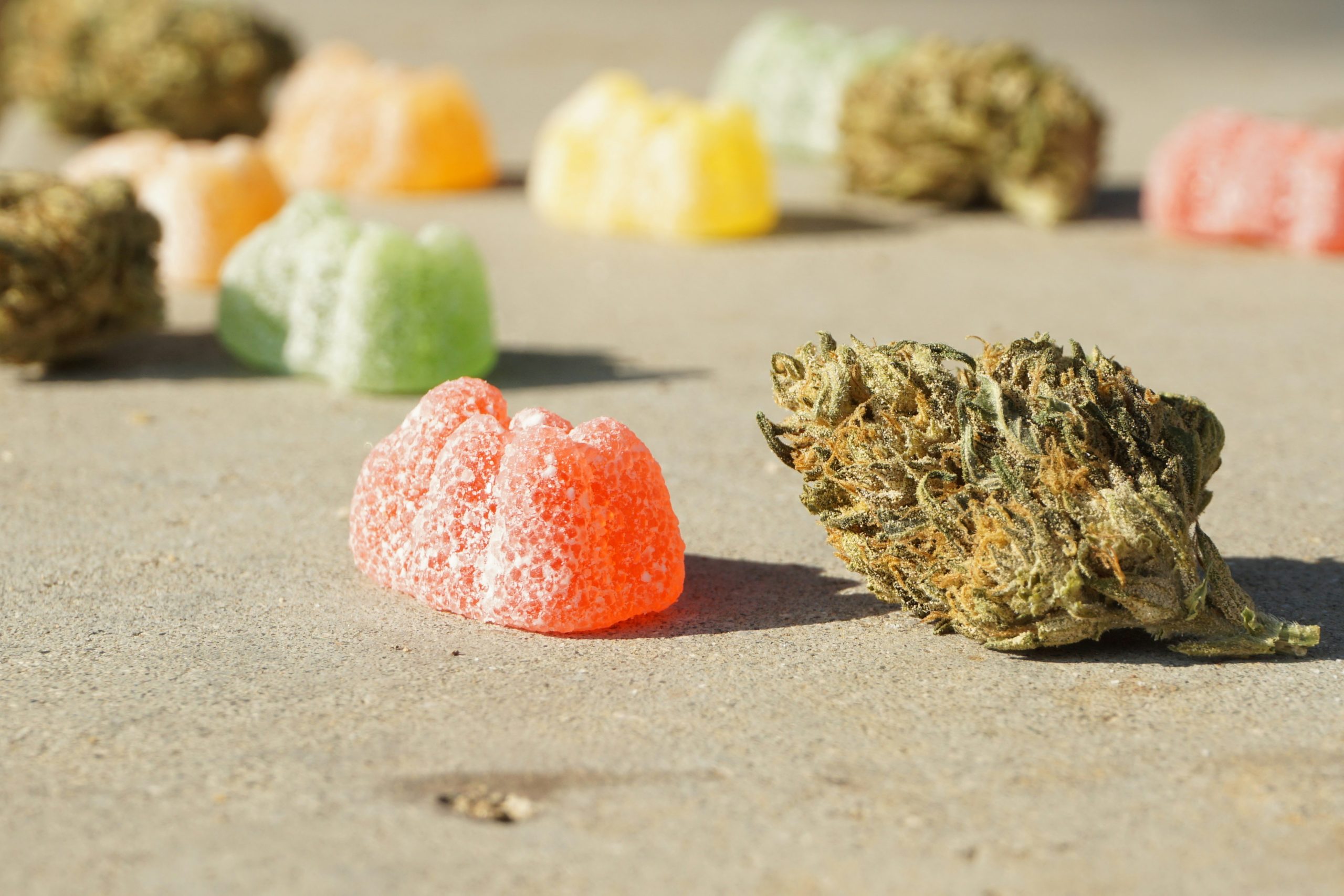
Walk into any cannabis dispensary and you’ll see the letters “CBD” and “THC” on nearly every product label. Both come from the same plant, but they behave completely differently once inside your body. Understanding that difference is the single most useful thing you can learn before choosing a product, whether you’re picking up your first purchase or trying to figure out why a product you liked last time felt so different from this week’s pick. This guide breaks down exactly what separates CBD from THC, what each one actually does, and how to choose based on the effect you’re after rather than guesswork.
What is THC?
THC, or tetrahydrocannabinol, is the cannabinoid responsible for the psychoactive effects most people associate with cannabis: the “high.” It works by binding directly to CB1 receptors concentrated in the brain and central nervous system, which is why it can noticeably alter mood, perception, and short-term memory. THC is also the cannabinoid most closely tied to the euphoric, relaxing, or energizing effects people describe after consuming flower, edibles, or concentrates, depending on the strain and dose.
What is CBD?
CBD, or cannabidiol, is a non-intoxicating cannabinoid, meaning it doesn’t produce the “high” associated with THC. Instead of binding strongly to CB1 receptors, CBD interacts with the endocannabinoid system in a more indirect way, and research suggests it may even soften some of THC’s more intense effects when the two are consumed together. This is part of why CBD has become popular among people looking for a sense of calm or relief without wanting an altered state of mind.
The core difference in plain terms
If you remember nothing else from this guide, remember this: THC gets you high, CBD does not. Everything else, potential relaxation, focus, sleep support, or physical comfort, builds on top of that fundamental difference. A product’s THC-to-CBD ratio is really a dial between “psychoactive” and “non-psychoactive,” and most products on the market today fall somewhere along that spectrum rather than at a pure extreme.
THC-dominant products: what to expect
Products high in THC and low in CBD tend to produce:
- A noticeable psychoactive effect, ranging from mild to intense depending on dose and tolerance.
- Effects that vary significantly by strain, with Indica, Sativa, and hybrid genetics each associated with different subjective experiences.
- A stronger case for starting with a low dose, especially with edibles, where THC’s effects take longer to appear and tend to feel more intense once they do.
CBD-dominant products: what to expect
Products high in CBD and low in THC tend to produce:
- No significant intoxicating effect, making them a common choice for daytime use or for people who want to stay clear-headed.
- A more subtle, gradual sense of calm that many users describe as taking the edge off rather than producing a dramatic shift in perception.
- Fewer concerns around dosing errors, since even higher amounts of CBD alone are unlikely to produce the kind of overwhelming experience that too much THC can.
Balanced (1:1) products: the middle ground
Many dispensaries, including Matchbox Cannabis, also carry balanced products formulated with roughly equal parts THC and CBD. These are designed for people who want some of THC’s effects without the full intensity, since CBD may moderate certain aspects of the THC experience. Balanced products are often a good bridge for someone who’s used CBD-only products before and wants to explore THC for the first time, or for an experienced THC consumer who wants a gentler session.
How to choose between CBD, THC, and balanced products
Think about your goal first, not the product category
Before browsing by category, ask yourself what you’re actually hoping to get out of the product. Wanting to unwind after work without feeling “high” points toward CBD. Wanting a stronger, more immersive experience points toward THC. Wanting something in between points toward a balanced ratio.
Consider your tolerance and experience level
If you’ve never used cannabis before, starting with a CBD-dominant or balanced product is generally the gentler entry point, since it reduces the chances of an overwhelming first experience. If you’re an experienced THC consumer exploring CBD for the first time, you may find CBD-only products feel underwhelming on their own, since you’re used to a psychoactive effect that CBD alone won’t provide.
Factor in when and where you’ll use it
CBD-dominant products are often better suited for daytime use, work-adjacent hours, or situations where staying clear-headed matters. THC-dominant products are generally better reserved for times when you don’t need to drive, operate machinery, or handle tasks that require full alertness.
Read the full cannabinoid panel, not just the headline ratio
A product labeled “CBD” isn’t necessarily THC-free. In Ontario, most CBD-forward products still contain trace amounts of THC. If you need to avoid THC entirely, for example due to workplace drug testing, look specifically for products that disclose a THC content of 0% or explicitly state they’re THC-free, rather than assuming “high-CBD” means “no THC.”
Common myths about CBD and THC
“CBD is basically weaker THC.” This isn’t accurate. CBD isn’t a diluted version of THC, it interacts with the body through a different pathway entirely and doesn’t scale up into a psychoactive effect no matter how much you take.
“THC is only useful for recreational highs.” While the psychoactive effect is real, many consumers use THC-dominant products deliberately for the specific subjective effects certain strains are known for, whether that’s easing into sleep, boosting a creative session, or unwinding after a stressful day. It’s still a personal, non-medical choice, but it isn’t purely about getting high for its own sake.
“You need to choose one or the other permanently.” Many consumers rotate between CBD, balanced, and THC products depending on the day, the occasion, or how they’re feeling, rather than sticking to a single category forever.
Product formats and how they affect your choice
CBD and THC show up across nearly every product format available at a dispensary:
- Flower and prerolls: typically THC-dominant, though CBD-rich flower strains do exist and are worth asking staff about.
- Vapes and concentrates: usually THC-dominant, prized for fast onset and strong effects. Our guide to full spectrum cannabis products explains how these products preserve a broader range of cannabinoids beyond just THC.
- Edibles: available across the full spectrum, from THC-only gummies to CBD-only capsules to balanced options.
- Oils and tinctures: one of the most common formats for CBD-forward products, prized for precise, adjustable dosing.
- Topicals: typically CBD-dominant or balanced, applied directly to the skin rather than consumed. If you’re curious about this category specifically, our guide to cannabis topicals for first-time buyers covers how they work and what to expect.
Starting low regardless of which you choose
Whether you land on CBD, THC, or a balanced product, starting with a lower dose and giving it time to take effect before consuming more is good practice across the board. This matters even more with THC-dominant edibles, where effects take longer to appear than with smoking or vaping. If dosing precisely is a priority for you, our guide to microdosing cannabis safely walks through how to find your own baseline without overshooting it.
FAQ about CBD vs. THC
Can CBD get you high? No. CBD is non-intoxicating and does not produce the psychoactive “high” associated with THC, regardless of how much is consumed.
Does CBD cancel out THC’s effects? Not entirely, but research suggests CBD may moderate or soften some aspects of THC’s psychoactive effect when the two are consumed together, which is part of why balanced products exist.
Is CBD legal without THC in Ontario? Cannabis-derived CBD products, including those with little to no THC, are legal to purchase from a licensed retailer in Ontario, the same way any other cannabis product is. Hemp-derived CBD sold outside licensed cannabis retailers follows a separate regulatory framework.
Will a CBD product show up on a drug test? Most standard drug tests screen for THC, not CBD. However, since many CBD products still contain trace THC, there’s a small possibility of a positive result with regular use of full-spectrum CBD products. If this is a concern, look for products explicitly labeled as THC-free.
What’s the best cannabinoid ratio for a beginner? There’s no single “best” ratio, it depends entirely on your goal. A CBD-dominant or balanced product is generally a gentler starting point than a high-THC product for someone with little to no cannabis experience.
Where can I find CBD products at Matchbox Cannabis? We carry a dedicated CBD selection at all our locations. You can browse our CBD offerings for Guelph, Sault Ste. Marie, and Toronto.
CBD and THC aren’t competing products, they’re two different tools that serve different goals. THC delivers the psychoactive effects cannabis is best known for, while CBD offers a non-intoxicating alternative that many consumers use for a more subtle sense of calm. Balanced products sit in between, giving you a way to explore both without committing fully to either extreme.
The right choice comes down to what you’re hoping to feel, when you plan to use it, and how experienced you are with cannabis overall. Our team at any Matchbox Cannabis location can walk you through our current CBD, THC, and balanced product selection and help you find the ratio that actually matches what you’re looking for.

About the Author: Vlad Parkanski
Vlad Parkanski is the Founder and CEO of Matchbox Cannabis. After immigrating to Toronto from Moldova in the 1990s, Vlad built his career through hands-on retail and entrepreneurship—opening a family-owned footwear business, expanding into international distribution, and working with global fashion and medical brands. A lifelong cannabis consumer, he entered the legal cannabis space in the early 2010s and founded Matchbox in 2018, opening the first store in 2021. Today, Matchbox has grown to six locations and a team of 35, known for its welcoming atmosphere, deep product knowledge, and personalized customer experience. Vlad remains deeply involved in daily operations, team development, and community initiatives, bringing decades of retail expertise and passion for the plant to everything Matchbox does.
See more about the author