
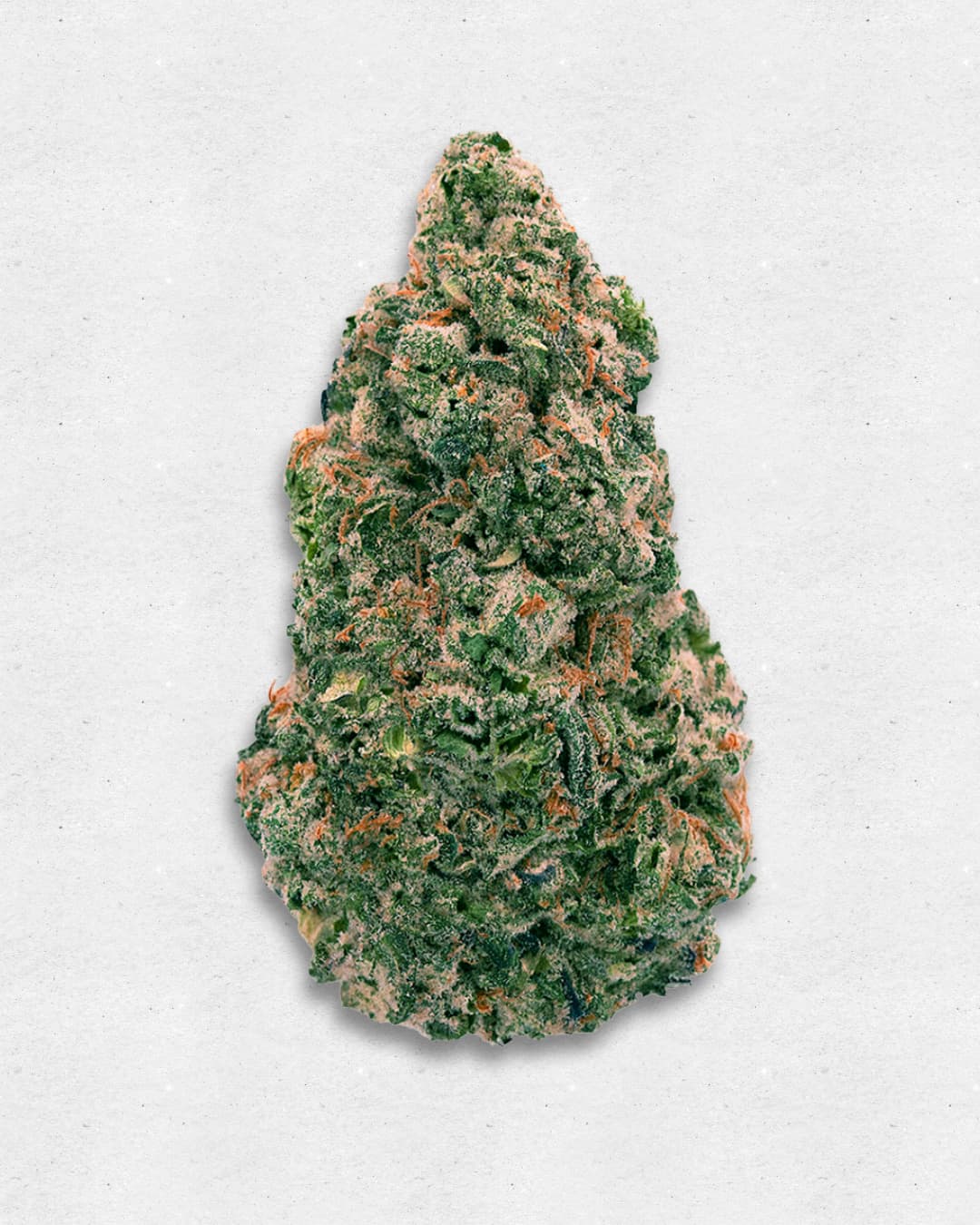
Some strains just have a name that sticks. Wedding Cake is one of them.
It conjures up exactly what it promises — something rich, layered, and a little indulgent. But behind that name is a genuinely interesting backstory, a lineup of breeders who had very different ideas about what to call it, and a rise to popularity that tells you a lot about how the cannabis market evolved through the 2010s.
Where Wedding Cake Actually Comes From
Wedding Cake is a hybrid strain — an indica-dominant cross that most experts trace back to Triangle Kush and Animal Mints, though some accounts list it as a phenotype of Triangle Kush crossed with Girl Scout Cookies. The confusion is intentional in some ways: the modern cannabis breeding world has always been a little secretive about genetics, and multiple breeders have claimed credit for what eventually became Wedding Cake.
The most widely cited origin points to Seed Junky Genetics, a California-based breeding operation that developed the strain in the mid-2010s. Their version of Wedding Cake gained serious traction on the West Coast dispensary scene before spreading nationally — and internationally — as legalization expanded.
The Name Debate
Here’s where it gets a little complicated.
Wedding Cake wasn’t always called Wedding Cake. In some markets — especially in California in its early years — it circulated under the name Pink Cookies. That name came from its lineage ties to Girl Scout Cookies, which is sometimes called just Cookies in cannabis circles. Pink Cookies was a natural extension of that family.
At some point, the strain got rebranded to Wedding Cake, likely to make it more marketable outside of California and to help it stand apart from the crowded Cookies family of strains. The new name worked. It referenced the strain’s flavor profile — sweet, rich, with a slightly tangy, vanilla-tinged finish — in a way that was immediately appealing to a mainstream audience.
Some traditionalists still prefer the Pink Cookies name. Either way, both refer to essentially the same plant.
The Genetics: What Makes It What It Is
Understanding Wedding Cake means understanding its parent strains a bit.
Triangle Kush is a legendary Florida-origin indica with deep OG Kush lineage. It’s known for a heavy, earthy, fuel-forward profile and deeply relaxing effects. On its own, it’s a strain for experienced consumers who want something grounding and intense.
Animal Mints (or Girl Scout Cookies, depending on which lineage account you follow) brings a sweeter, more complex terpene profile — along with a euphoric, balanced high that made Cookies strains so popular in the first place.
The cross produced something genuinely distinctive: a strain with the relaxing body weight of its indica heritage, softened by a more euphoric cerebral component and a flavor profile that’s far more approachable than either parent on its own.
Wedding Cake Hits the Mainstream
By 2018 and 2019, Wedding Cake was showing up on menus across legal markets from California to Colorado to Michigan. Its THC content — typically landing between 22% and 27% in tested flower — helped it stand out on dispensary shelves during a period when consumers were using potency as a proxy for quality.
It won numerous awards at cannabis cups and competitions during those years, which accelerated its visibility. Leafly named it Strain of the Year in 2019, which exposed it to a much wider audience of newer cannabis consumers who might not have otherwise sought it out.
That kind of recognition doesn’t just move product. It shapes what other breeders start crossing next. Wedding Cake quickly became a parent strain in its own right, contributing to a wave of new hybrids that are still popular today.
Why It Endures
A lot of strains have a moment and fade. Wedding Cake has had a longer run than most, and there are a few reasons for that.
The flavor profile is genuinely distinct and broadly appealing. Most people who try it can identify what makes it different without needing much cannabis vocabulary to describe it. The effects are balanced enough to work for a range of people — it leans toward relaxation without being a pure knockout, and it has a pleasant, mood-lifting quality that keeps it accessible.
It also helped that the strain translated well across formats. Wedding Cake works in flower, in concentrates, in vape cartridges, and in edibles. Not every strain carries its character through all those forms, but Wedding Cake’s terpene profile is expressive enough to hold up.
That combination — distinctive flavor, balanced effects, versatility across formats — is roughly the formula for a strain that lasts. Wedding Cake checks all three boxes, which is why, nearly a decade after it first appeared on dispensary menus, it’s still one of the most requested strains in most legal markets.
If you’re new to Wedding Cake and want to understand what the conversation is about, starting with flower is usually the best approach. It gives you the fullest picture of what the strain actually is before you explore it in other forms.

About the Author: Vlad Parkanski
Vlad Parkanski is the Founder and CEO of Matchbox Cannabis. After immigrating to Toronto from Moldova in the 1990s, Vlad built his career through hands-on retail and entrepreneurship—opening a family-owned footwear business, expanding into international distribution, and working with global fashion and medical brands. A lifelong cannabis consumer, he entered the legal cannabis space in the early 2010s and founded Matchbox in 2018, opening the first store in 2021. Today, Matchbox has grown to six locations and a team of 35, known for its welcoming atmosphere, deep product knowledge, and personalized customer experience. Vlad remains deeply involved in daily operations, team development, and community initiatives, bringing decades of retail expertise and passion for the plant to everything Matchbox does.
See more about the author