
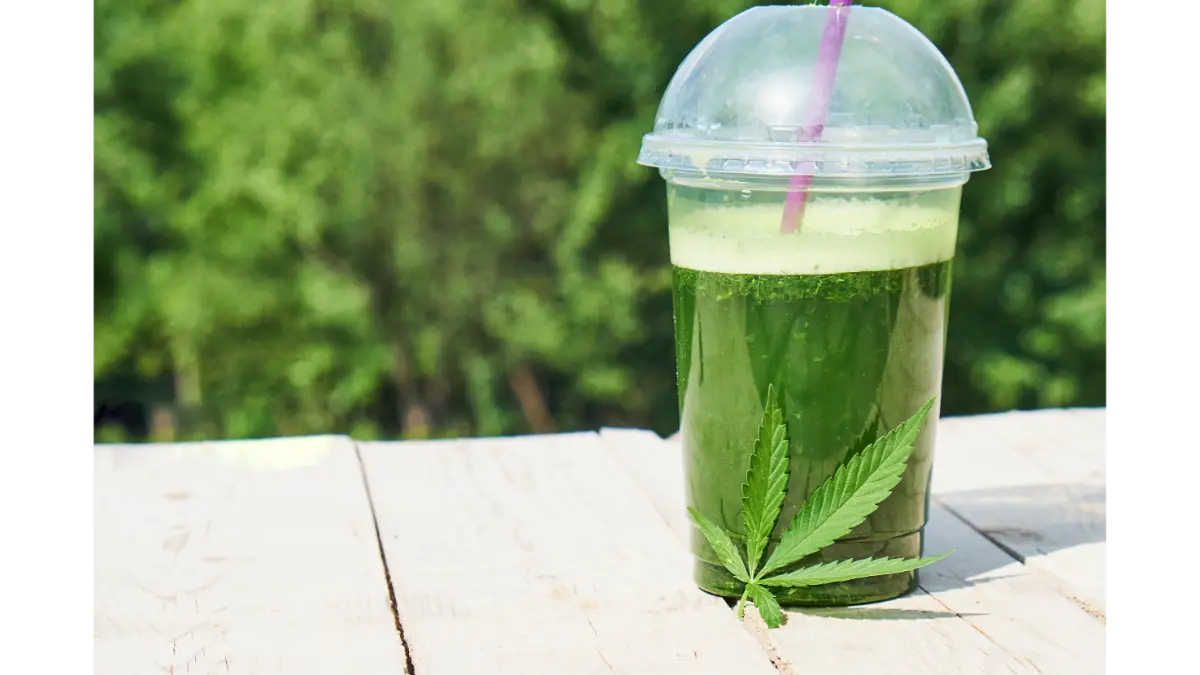
When Canada legalized edible cannabis products in October 2019, beverages were included in the new regulatory framework — and they’ve quietly become one of the most interesting and fastest-growing categories in the market. Despite that growth, THC beverages still confuse a lot of consumers. How are they different from edibles? Why do they sometimes kick in faster? What should you be looking for on the label? This guide answers those questions and gives you a practical starting point for choosing your first cannabis drink.
What Makes a Cannabis Beverage Different from an Edible
At first glance, a THC-infused drink looks like just another format for consuming cannabis — the same as a gummy or a chocolate, just in liquid form. But there are meaningful physiological differences in how beverages are absorbed compared to traditional edibles, and understanding them changes how you should approach dosing and timing.
Traditional edibles — gummies, chocolates, capsules — are digested through the gastrointestinal tract. The active compounds are metabolized in the liver before entering the bloodstream, which is why the onset is slow (often 45 minutes to 2 hours) and the effects can be more intense and prolonged than inhaled cannabis. Beverages are a bit different. Many cannabis drinks use nano-emulsification technology — a process that breaks THC molecules into extremely small particles that can be suspended in water and absorbed more efficiently through tissues in the mouth and upper digestive tract. The result, with nano-emulsified products, is a meaningfully faster onset: often 15 to 30 minutes rather than the 90-minute standard edible window.
This faster onset is one of the primary reasons beverages have attracted consumers who find traditional edibles unpredictable. When effects arrive more quickly, it’s easier to gauge where you are and decide whether to have more. The dosing guesswork that characterizes a lot of edible experiences is reduced considerably.
What the Label Tells You
Canadian cannabis beverage labels are required to disclose total THC and CBD content per serving and per package. Here’s how to read the key numbers:
- mg THC per serving: The regulatory cap for cannabis beverages in Canada is 10mg THC per package. This is a relatively low ceiling — intentionally so for a product category where consumers might drink more than one serving socially. Most beverages are formulated at 2.5mg, 5mg, or 10mg per container.
- CBD content: Some beverages include CBD alongside THC. Higher CBD ratios tend to moderate the psychoactive intensity of THC while extending the duration of effects. A 1:1 THC:CBD beverage at 5mg each behaves quite differently from a 10mg THC-only drink.
- Serving size: Most cannabis beverages are single-serve containers — the entire can or bottle is one serving. Confirm this before you assume a large can is meant to be split.
Who Cannabis Beverages Are Best Suited For
Cannabis drinks have found a particular audience among a few consumer groups, and understanding who benefits most from the format helps you assess whether it’s right for you:
- Non-smokers and non-vapers: Consumers who prefer not to inhale anything but want a more immediate onset than a traditional edible will find beverages a strong middle ground.
- Social drinkers exploring alternatives: Cannabis beverages have gained significant traction as a low- or no-alcohol option in social settings. The can format is familiar, the onset is fast enough to be social-occasion appropriate, and the 10mg regulatory cap keeps doses manageable for group settings.
- Microdosers: A 2.5mg beverage is one of the lowest-dose cannabis products available in Canada. For consumers who want a subtle, functional effect rather than a pronounced high, low-dose beverages are among the most controllable options on the market.
- Curious newcomers: The beverage format removes some of the ritual and uncertainty of other consumption methods. Open, drink, wait 15–30 minutes — the process is intuitive for people who have never used cannabis before.
What to Expect from Your First THC Beverage
If you’re trying a cannabis beverage for the first time, a few practical guidelines:
- Start at 2.5mg or 5mg. Even if you have prior edible experience, beverages with nano-emulsification absorb differently. Start lower than you think you need to and give the product time to work before deciding to have more.
- Give it 30 to 45 minutes. Even with faster-onset formulations, give yourself a full window before reassessing. It’s easy to assume nothing is happening at 20 minutes and overconsume, only to find the effects arrive stronger than expected shortly after.
- Stay hydrated. Cannabis can cause dry mouth. Drinking water alongside your cannabis beverage is a good habit and helps you avoid confusing dehydration discomfort with effects from the product.
- Be in a comfortable, familiar environment for your first time. The social use case is real, but your first experience with a new cannabis format is best done somewhere low-pressure, where you know you’re safe and comfortable.
- Don’t mix with alcohol, particularly for your first experience with the format. Alcohol and THC interact in ways that can intensify the effects of both unpredictably.
Popular Formats on the Ontario Market
The Ontario cannabis beverage market has diversified considerably since 2019. You’ll find:
- Sparkling water and soda formats — flavoured and unflavoured, typically at 2.5mg–5mg THC.
- Tea and botanical drink formulations, often combining THC with CBD and herbal ingredients.
- Non-alcoholic “beer-style” or “spirit-style” beverages, formulated to approximate the social ritual of a drink without the alcohol.
- Shots and concentrated liquid formats — smaller volume, sometimes higher intensity per millilitre.
The full THC and CBD drinks selection at Matchbox Cannabis covers the main formats currently available in Ontario, and the staff at any location — whether you’re visiting Rogers Road, Steeles, Guelph, or Sault Ste. Marie — can walk you through the differences between specific products and help you find one that fits your intended use.
How Beverages Fit Alongside Other Ingestible Formats
Cannabis beverages don’t replace edibles or gummies — they add an option to a format toolkit that’s now genuinely broad. A consumer might use a low-dose beverage in a social setting, a higher-potency gummy for a more intentional evening experience, and a CBD oil for daytime functional use. The availability of all three formats at a single licensed dispensary is one of the most practical improvements legal cannabis retail has delivered since legalization.
If you haven’t tried a cannabis beverage yet, it’s worth picking one up on your next visit and approaching it with the same curiosity you’d bring to any new product category. The format has earned its place in the market — it’s genuinely different from what came before it, and for a lot of consumers, it’s exactly what they were looking for.

About the Author: Vlad Parkanski
Vlad Parkanski is the Founder and CEO of Matchbox Cannabis. After immigrating to Toronto from Moldova in the 1990s, Vlad built his career through hands-on retail and entrepreneurship—opening a family-owned footwear business, expanding into international distribution, and working with global fashion and medical brands. A lifelong cannabis consumer, he entered the legal cannabis space in the early 2010s and founded Matchbox in 2018, opening the first store in 2021. Today, Matchbox has grown to six locations and a team of 35, known for its welcoming atmosphere, deep product knowledge, and personalized customer experience. Vlad remains deeply involved in daily operations, team development, and community initiatives, bringing decades of retail expertise and passion for the plant to everything Matchbox does.
See more about the author